The Origin Story: Why We Built Luma
From a simple AI tool to a comprehensive bookmark manager.

It all started with a simple idea—or rather, a simple tool. A while back, I built a browser extension called Claudify. It was designed as a toolbox for the Claude.ai platform, and its standout feature was a PDF creator that users loved. It was useful, it was functional, and it solved a specific problem.
But as with all creative endeavors, one idea sparked another.
My girlfriend and I were discussing the future of these tools. This was the time AI was booming and I remember thinking aloud, "What if we created a single tool that could store all these AI chats?" That was the seed. A centralized hub for your AI interactions.
However, as we peeled back the layers of that idea, we realized something bigger. Why limit ourselves to just AI chats? If we're building a home for chat pages, why not make it capable of storing any website we visit?
And just like that, Luma Bookmark Manager was born.
The Discussions
The process wasn't just about coding; it was about crafting. This was back during our time at the University of Moratuwa. My girlfriend and I would grab a coffee at the "Wala" canteen and head over to a place called "Lagaan" to discuss our ideas.
It’s a beautiful, open theatre-looking area filled with trees and the sound of the wind—a place of quiet and peace. We would sit there, sipping our coffee, and just talk. We discussed the vision. We sketched out user interfaces on notebooks. We debated features.
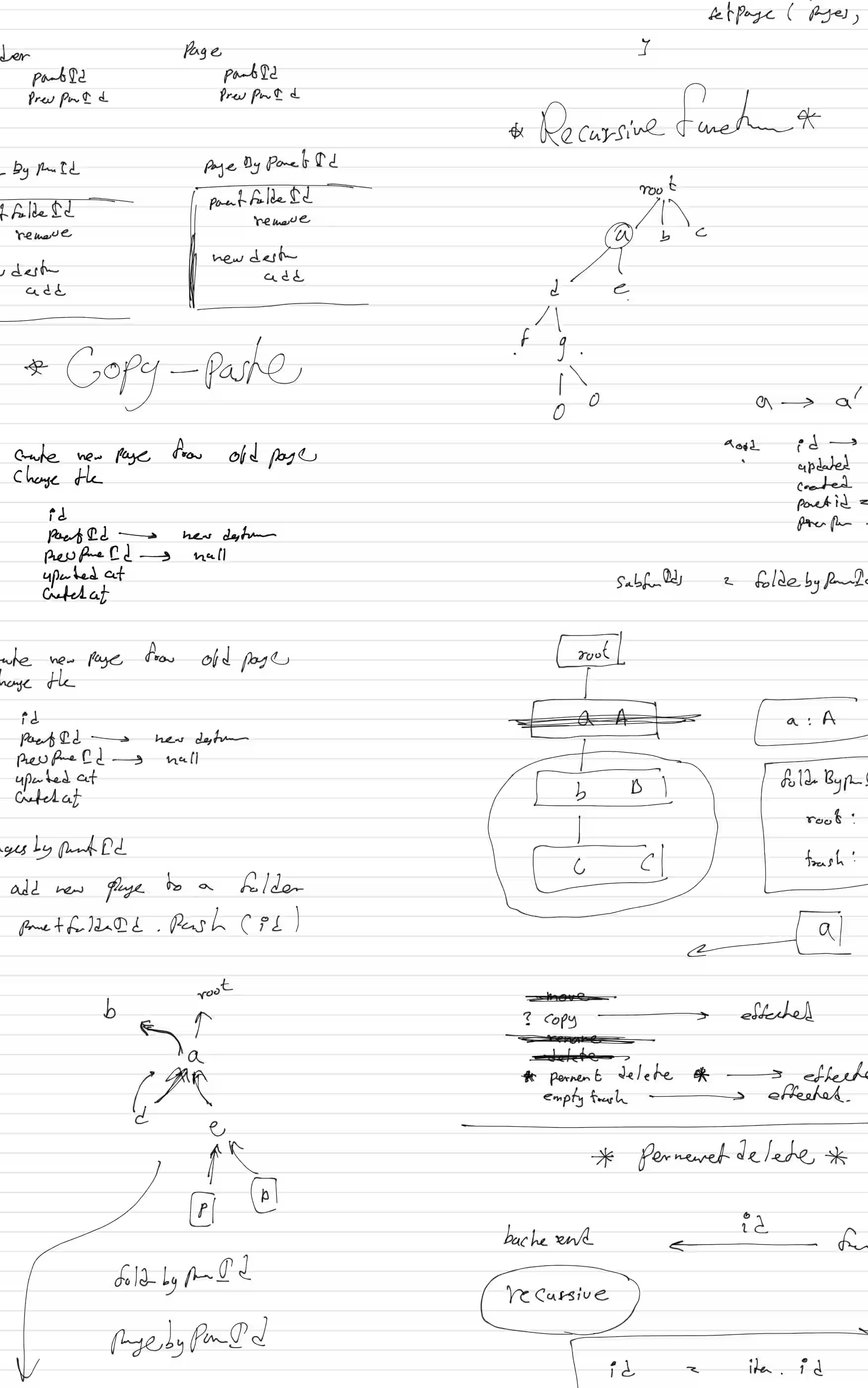
But most of our time was spent on the system architecture.
We had a clear goal: we wanted to build something incredibly cost-effective for us to maintain, yet powerful enough to provide every feature a user would need in a bookmark manager. We didn't want to compromise on quality or performance.
Built for Speed and Privacy
The result of those long discussions is the Luma you see today. Because of the time we invested in the architecture, Luma is blazing fast. Navigating between folders, searching for a link, interacting with the UI—it all feels instantaneous.
Crucially, we made a decision about privacy that stands at the core of Luma: we do not store any of your data on our servers.
Your privacy is paramount. Instead of holding your bookmarks hostage in our database, Luma syncs everything directly to your Google Drive. You own your data. We just provide the lens to view and manage it.
This approach allowed us to keep Luma lightweight, secure, and incredibly responsive.
What's Next?
This is just the beginning of the story. We're proud of the technical engineering that makes Luma tick. In future blog posts, I'll dive deeper into the specific system architecture and the performance optimizations that make Luma feel so instant.
For now, I just wanted to share why we built this. It was born from a desire to create something better and built with a commitment to speed and privacy.
Welcome to Luma.